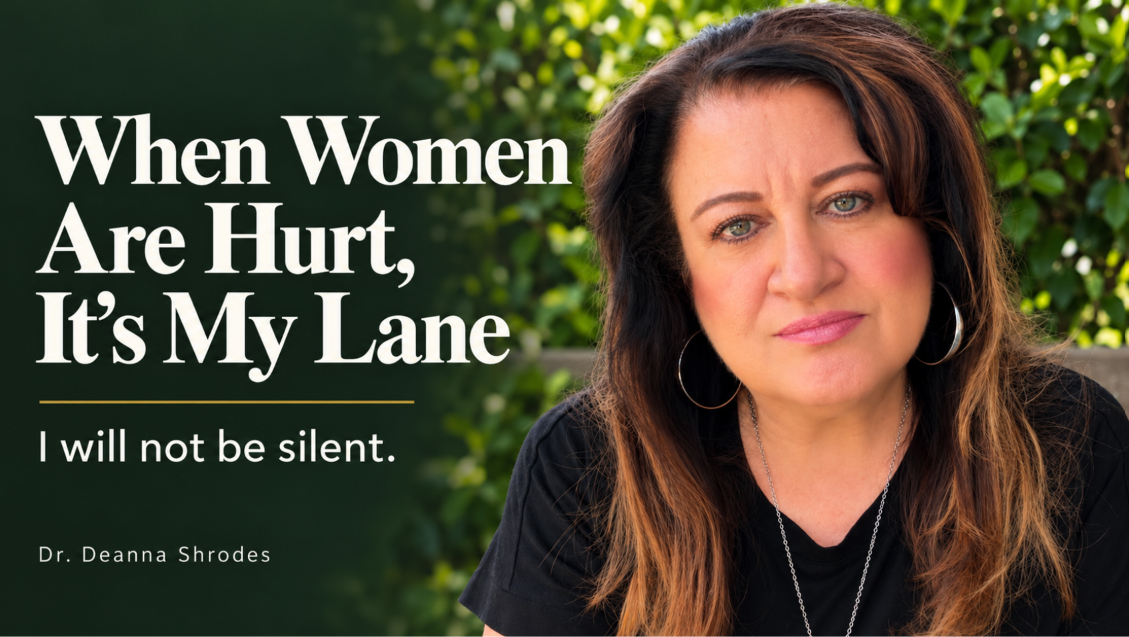
I’m an ordained minister in the Assemblies of God, an AG pastor, and a district women’s ministries director in the Assemblies of God. Caring about what happens to women is part of my calling and my responsibility. Championing and encouraging women is my priority. So is standing beside them when they are hurting.
When women are hurt, it’s my business.
When women are hurt, it’s my lane.
Their experiences matter, their voices deserve to be heard, and their pain deserves a serious response.
My academic work also informs this commitment. I earned my master’s and doctorate at Southeastern University, where my doctoral dissertation focused on trauma in the lives of ministers. That research deepened my commitment to compassionate care and meaningful accountability.
When concerns about abuse or injustice arise, we can pursue truth carefully while treating women with compassion. Someone’s position, influence, or relationships should never determine how seriously we take a concern. Our willingness to respond should not depend on whether doing so keeps our own lives comfortable.
These concerns extend beyond women personally reporting abuse to our ministries. Allegations that leaders purchase sex or participate in pornography or paid sexual content raise serious questions about sexual ethics, objectification, and possible exploitation. These situations require accurate descriptions and careful examination. The absence of a direct complaint does not make credible concerns irrelevant. Women’s dignity matters whether or not they attend our churches or have access to our reporting processes.
Abuse, misconduct, and failures of accountability occur across denominations and organizations. I am addressing the Assemblies of God because this is my fellowship—my tribe. I love it, I serve within it, and I am hurting for the people in it. As far as it depends on me, I want to help make it a safer, healthier place through compassionate care, integrity, and meaningful accountability.
Careful discernment includes listening to women
Scripture calls us to be “quick to listen, slow to speak” (James 1:19). I take that seriously. Being quick to listen includes listening carefully to the woman who is telling us she has been harmed. Proverbs 18:17 reminds us to examine an account carefully. It does not tell us that every first report is dishonest or driven by an agenda. An account can be incomplete and still describe real harm. We should ask thoughtful questions without beginning from the assumption that the person coming forward is trying to manipulate us.
We must recognize how easily a call for discernment can become an attack on the credibility of someone reporting harm. Saying that first reports may carry an agenda assigns a motive before the account has even been examined. That is an assumption, not a finding.
When a response moves from denying or minimizing harm, to attacking the person reporting it, to portraying the accused as the real victim of the disclosure, it follows a pattern known as DARVO: Deny, Attack, and Reverse Victim and Offender.
Seeking additional information is responsible. Treating a woman as suspect simply because she came forward is not. We must be willing to examine the allegation without turning the act of reporting it into the offense.
There is a difference between withholding a final judgment and withholding a response.
We can seek further information while offering care, addressing safety concerns, and requesting an impartial investigation. We can also speak clearly about the standards our leaders should uphold before every fact of a particular case is established.
“Slow to speak” must not become a demand for silence. Careful discernment requires us to examine our own loyalties, too. Our relationships with influential people can affect our judgment just as surely as an initial report can.
I am willing to listen, learn, and correct anything I get wrong. I am also willing to speak when women’s safety and dignity are at stake. I believe faithful leadership requires both.
I want to be liked, as most of us do, but I cannot make approval the measure of whether I am doing what is right.
What does that responsibility look like in practice? Here are five things I believe leaders of women must be willing to do.
1. Listen without making a woman defend her right to be heard.
When a woman shares an experience of abuse, our first response matters. Before we explain, question, or defend someone we know, we need to listen.
“Thank you for telling me.”
“I’m taking what you’ve shared seriously.”
“What do you need right now?”
These are places to begin.
We should not make a woman’s access to care depend on whether she reported immediately, remembers every detail, or tells her story without tears or anger. Nor should we assume that someone’s kindness toward us tells us everything about how that person treats others.
Listening compassionately does not require us to announce a verdict. It requires us to recognize that a person has entrusted us with something painful and deserves a thoughtful response.
2. Make safety and practical support a priority.
A woman who discloses abuse needs more than an encouraging word. She may need an advocate, qualified counseling, medical care, safe housing, or help understanding her options. We can ask what would help and connect her with people trained to provide it. We can offer to accompany her to an appointment or help her locate resources. We should respect her choices and avoid pressuring her to share more than she wants to share. We must also be honest about any reporting responsibilities that apply to our role. We should never promise absolute secrecy when we may be required to report.
Prayer matters deeply. So does what we do after we pray.
We should never pressure a woman to meet privately with the person she says harmed her, resume contact with them in any regard, or demonstrate forgiveness by placing herself in an unsafe situation. Her safety must be part of our response.
I recently heard about a young woman who disclosed spiritual abuse to an older female minister—someone she looked to as a mother in the faith. The minister’s very first response was, “You know you need to forgive him, right?”
Before asking what happened, whether she was safe, or what support she needed, the conversation turned to her responsibility toward the person she said had harmed her.
That kind of response can retraumatize a woman, leaving her feeling dismissed, ashamed, or spiritually pressured when she has reached out for help. Spiritual mothering should offer compassionate listening, care, and protection. Forgiveness matters to our faith, but it must never be used to rush past someone’s pain or sidestep accountability. A woman’s willingness to forgive should never be the price of being heard or helped.
3. Ask for an accountable process—and follow through.
When serious concerns arise, “Someone is handling it” should not end every question. Neither should, “We need to trust our leadership.” Transparency is key. “The leadership is taking care of it” should mean that a responsible process is underway, with timely action, appropriate safeguards, and meaningful follow-through. Thorough investigations can take time. But when months—or years—pass without adequate protection or accountability, we have a responsibility to ask further questions. If action comes only after a situation reaches the media, we should examine why public exposure was needed to prompt a response. Women should not have to depend on headlines to make their safety and dignity a priority.
Who is responsible for receiving the report? What safeguards are in place while the concerns are examined? How are conflicts of interest addressed? Who will follow up with the woman who came forward?
Allegations of abuse warrant qualified, impartial review. Where personal relationships or institutional interests create conflicts, independent outside expertise is necessary. Church processes should never be treated as a substitute for appropriate civil reporting or investigation.
Not every detail can be made public. But confidentiality should protect people’s privacy while allowing meaningful accountability. It should not become an indefinite explanation for why no one can ask about safety, process, or follow-through.
As leaders, we can put our concerns in writing, request a response, and continue asking appropriate questions when those concerns remain unanswered.
I would take that a step further: I believe every person within the Assemblies of God, not only credentialed ministers or those holding leadership positions, but church members and other adherents…has a right to ask responsible questions about how concerns are being handled. You should not need a title or credentials for your voice to matter. While confidential details cannot always be shared, people can still ask about the process, safeguards, and accountability. Asking those questions should not be treated as disloyalty or rebellion. It can be an expression of love for the church and concern for the people entrusted to its care.
4. Use our influence to speak—and protect women from retaliation.
Some of us have access to rooms, conversations, and decision-makers that a hurting woman does not. That access carries responsibility.
We can ask difficult questions. We can challenge dismissive language. We can object when a woman who reports harm is described as disloyal, divisive, or a threat to the ministry. We can refuse to participate in efforts to shame her into silence.
Speaking responsibly also means distinguishing what we know from what remains alleged or unknown. It means protecting a woman’s identity and seeking her permission before sharing her story publicly. We can advocate for safety and accountability without exposing someone else’s private pain.
I know women in ministry who are afraid to speak because they fear losing their position, future opportunities, or even their ministerial credentials. I do not take those fears lightly. Their livelihood, their calling, and years of service may feel at stake. I have compassion for women carrying that pressure, and I believe we must ask what kind of leadership culture makes them afraid to raise legitimate concerns. A healthy fellowship should welcome responsible questions and protect those who bring them forward. As leaders of women, we need to support one another so that no woman has to face that pressure alone—and so that fear for our own future does not leave hurting women without advocates. Our influence should help women gain access to care and a fair hearing. It should never make them afraid to ask for either.
Time and again, I have heard ministers ask, “What about the thousands of good and faithful AG pastors? You never hear about them in the media.”
I am grateful for the many ministers who serve with integrity and care for people faithfully. But their faithfulness does not diminish the harm done by others or answer the question of how we should respond to it.
I am concerned when the reputation of the “good and faithful” becomes a reason to redirect attention away from those who have been hurt. I am also concerned when protecting relationships, opportunities, or livelihoods keeps us from challenging what is wrong. Some ministers are advocating quietly, and public statements are not the only measure of courage. But whether privately or publicly, our convictions need to lead to action.
The good and faithful need to become more vocal and persistent in calling for change. We need to ask difficult questions, insist on meaningful accountability, and stand beside those who have been harmed. Our claim to faithfulness should be reflected in how we respond when doing what is right carries a cost.
I am also troubled when ministers continue to give speaking platforms to people facing serious, unresolved allegations of abuse or sexual misconduct—inviting them into churches and conferences or seeking their coaching while an investigation is underway. An investigation does not establish guilt. But an invitation to speak or coach communicates trust and endorsement, and we should take that responsibility seriously.
We do not have to reach a final verdict before exercising sound judgment about whom we place in positions of influence. I do not consider it good and faithful leadership to continue offering those endorsements without adequately addressing credible concerns, potential risks, and the impact on those reporting harm. Faithfulness includes being willing to pause an invitation, seek answers, and put people’s safety ahead of access to a prominent personality.
5. Stay beside women after the attention fades.
Care cannot end with a statement, a meeting, or a promise to look into something. Follow up. Ask whether she received the help she requested. Ask whether she has experienced pressure or retaliation. Keep offering support without making her repeatedly recount what happened.
At an organizational level, we should advocate for clear reporting channels, training on abuse and the misuse of power, safeguards against retaliation, and access to support outside the immediate leadership structure.
Women need to know where they can turn before a crisis happens. And when they do come forward, they need to see that our concern lasts longer than the initial conversation.
Our response shapes the future of the church
Ministerial leaders, I hope you will join me in courageously speaking truth to power. No title, future opportunity, or ministry relationship is worth compromising our integrity.
Silence can allow harm to continue. We have a responsibility to consider whom our silence protects and whom it leaves vulnerable.
Younger generations are watching how we respond. Our actions help shape whether they believe the church is a place they can trust with their lives, their questions, and their pain. Some are deciding whether to pursue ministerial credentials with our fellowship or whether to retain the credentials they already hold. I have spoken to many young people personally whose decisions about whether to stay a part of the Assemblies of God remains in the balance. I hope every leader out there realizes that all eyes are on you! What will you do with that?
We have a responsibility to lead with integrity and give them meaningful reasons to trust our fellowship and build their future here. That trust must be earned through our actions.
Women’s safety matters. Their dignity matters. And the way we care for them matters to the future of the church.
Let’s give them reason to trust us.

0 Comments